Introduction
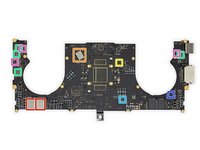
Apple a introduit ses processeurs M1 Pro/Max dans les MacBook Pro 2021. Comment ces nouveaux SoC internes modifient-ils le reste de la carte mère ? Consultez ce tutoriel d'identification des puces pour le savoir !
Chapeau à notre membre de la communauté C. Chin pour sa formidable contribution !
-
-
-
Identification des puces, partie 1 :
-
Système sur une puce (SoC) APL1103 M1 Pro Apple
-
Mémoire LPDDR5 SDRAM 8 Go (16 Go au total) K3LKYKY0EM-ZGCP Samsung
-
Mémoire Flash NAND 128 Go KICM225UZ0460 Kioxia
-
Gestion d'alimentation APL1098/343S00515 Apple
-
Convertisseur DisplayPort-to-HDMI MCDP2920 Kinetic Technologies
-
Contrôleur du lecteur de carte GL9755A Genesys Logic
 Demander à FixBot
-
-
-
Identification des puces, partie 2 :
-
Synchroniseur Thunderbolt 4 JHL8040R Intel
-
Mémoire Flash NOR Série 64 Mb MX25U6472F Macronix
-
Mémoire Flash NOR Série 8 Mb W25Q80DVUXIE Winbond
-
Convertisseur step-down synchrone RAA225701C Renesas ?
-
Convertisseur step-down synchrone LT86422Analog Devices
-
Convertisseur step-down TPS62130B Texas Instruments
-
Convertisseur Buck synchrone 6 A TPS62180 Texas Instruments
-
-
-
Identification des puces, partie 3 :
-
Protection surtension TVS2200 Texas Instruments
-
Commutateur de puissance FPF2495CUCX ON Semiconductor
-
Commutateur de puissance Texas Instruments (probablement)
-
Régulateur LDO 250 mA / 5.0 V NCV8160AMX500TBG ON Semiconductor
-
Émetteur-récepteur/convertisseur de tension Dual-Bit 74AVC2T45 Nexperia
-
Convertisseur de bus Single-Bit SN74AXC1T45 Texas Instruments
-
Buffer simple 74AUP1G07 Nexperia
-
-
-
Identification des puces, partie 4 :
-
Convertisseur de tension 1-Bit Multi-tension 2 canaux LSF0102 Texas Instruments
-
Convertisseur de tension 1-Bit Multi-tension LSF0101 Nexperia
-
Buffer double SN74AUP2G07 Texas Instruments
-
Buffer simple SN74LVC1G07 Texas Instruments
-
Bascule de Schmitt 74AUP1G17 Nexperia
-
Simple porte AND 74AUP1G08 Nexperia
-
-
-
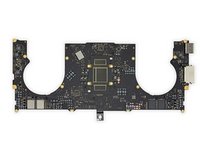
Identification des puces, partie 1 :
-
Mémoire Flash NAND 128 Go KICM225VF9081 Kioxia
-
Module Bluetooth/Wi-Fi 339S00912 USI
-
Contrôleur NFC avec Secure Element SN210V NXP Semiconductor
-
Contrôleur courant/port USB Type-C Port CD3217B12 Texas Instruments
-
Chargeur de batterie Li-Ion ISL9240 Renesas
-
Mémoire Flash NOR 8 Mb W25Q80EWUXIE Winbond
-
Mémoire Flash NOR 8 Mb W25Q80DVUXIE Winbond
-
-
-
-
Identification des puces, partie 2 :
-
Contrôleur PWM de phase de puissance Renesas
-
Encodeur/décodeur audio CS42L84A Cirrus Logic
-
Amplificateur audio SN012776B0 Texas Instruments
-
Convertisseur step-down TPS62130B Texas Instruments
-
Convertisseur boost RAA209100 Renesas (probablement)
-
Pilote LED rétroéclairage LP8548B1 Texas Instruments
-
Double répéteur USB 2.0 TUSB2E22 (probablement) Texas Instruments
-
-
-
Identification des puces, partie 3 :
-
Amplificateur de courant INA190A3 Texas Instruments
-
Amplificateur de courant INA190A4 Texas Instruments
-
Amplificateur Opérationnel 1.5 MHz Rail-to-Rail MAX9620 Maxim Integrated
-
Amplificateur opérationnel simple NCS333ASQ3T2G ON Semiconductor
-
Matrice de signaux mixtes Dialog Semiconductor(probablement)
-
Extenseur E/S 16-Bit PCAL6416A NXP Semiconductor
-
Double interrupteur analogique SPST ADG1422BCPZ Analog Devices
-
-
-
Identification des puces, partie 4 :
-
Référence de tension 2,5 V REF3325 Texas Instruments
-
Régulateur LDO Ajustable 500 mA TLV75801P Texas Instruments
-
Régulateur LDO 500 mA / 3,3 V TLV75533P Texas Instruments
-
Régulateur LDO 250 mA / 3,0 V LP5907SNX-3.0 Texas Instruments
-
Régulateur LDO 250 mA / 1,8 V NCP163BMX180TBG ON Semiconductor (probablement)
-
Régulateur LDO 200 mA / 3,3 V TLV70733P Texas Instruments
-
Régulateur LDO 200 mA / 1,825 V TPS7A201825 Texas Instruments
-
-
-
Identification des puces, partie 5 :
-
Émetteur-récepteur conversion 4-Bit 74AVC4T774 Nexperia
-
Émetteur-récepteur conversion 74AUP1T45 Nexperia
-
Adaptateur de tension 2 canaux multi-voltage LSF0102 Texas Instruments
-
Adaptateur de tension multi-voltage simple-bit LSF0101 Nexperia
-
Adaptateur de tension double-bit 74AVC2T45 Nexperia
-
Adaptateur de tension simple-bit SN74AUP1T34 Texas Instruments
-
Récepteur de bus simple-bit SN74AXC1T45 Texas Instruments
-
-
-
Identification des puces, partie 6 :
-
Buffer 74AXP1T34 Nexperia
-
Buffer double 74AUP2G07 Nexperia
-
Buffer simple SN74LVC1G07 Texas Instruments
-
Bascule de Schmitt 74AUP1G17 Nexperia
-
Double porte OR 74LVC2G32 Nexperia
-
Simple porte OR SN74AUP1G32 Texas Instruments
-
Protection de port USB Type-C TPD4S311A Texas Instruments
-
-
-
Identification des puces, capteurs :
-
Accéléromètre/Gyroscope 6 axes BMI282 MEMS Bosch Sensortec
-
-
-
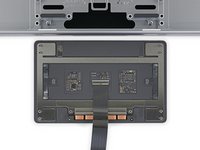
Identification des puces :
-
Microcontrôleur 32-Bit ARM Cortex-M4 avec 1 Mo de mémoire Flash STM32L4P5QG STMicroelectronics
-
Contrôleur de Touchpad BCM5976C1 Broadcom
-
Convertisseur A/D MAX11390A Maxim Integrated (probablement)
-
Régulateur de courant H-Bridge 5A MP6519 Monolithic Power Systems
-
Moniteur de tension d'alimentation 1,67 V TPS3831G18 Texas Instruments
-
Commutateur de puissance TPS22915 Texas Instruments
-
-
-
Identification des puces, capteurs :
-
Accéléromètre 3 axes BMA282 Bosch Sensortec
-
Capteur de température TMP461 Texas Instruments
-
-






Merci à ces traducteurs :
100%


Ces traducteurs nous aident réparer le monde ! Vous voulez contribuer ?
Je commence à traduire ›
10 commentaires de tutoriel
In practise, the efficiency of an LDO regulator is dependent on how much voltage it is dropping. While operating, an LDO is effectively a resistor that varies in real-time to ensure its output voltage stays stable despite changes in load current.
Power = I (current) x V (voltage)
Since an LDO is a resistive element, yes, it burns off energy as heat in this process. So an LDO dropping 18V to 5V could be very inefficient, more so when driving a higher current load as shown by the formula above. However, if an LDO is used to generate a 3.3V rail from a 5V rail, it is dropping just 1.7V, resulting in less power dissipation for the same load current.
You’re right, using an LDO for a large voltage drop is not good electrical design. But LDOs have excellent noise rejection performance, meaning they can take a noisy rail from a switching buck/boost converter with lots of transient or high-draw components on it, and create a much cleaner rail for lower-current, more sensitive devices. This is what I expect Apple’s doing.
LDOs drop the difference in voltage as heat, yes - hence the voltage difference between input and output determines the efficiency (eg a 3.0v LDO fed by 6.0v is 50% efficient).
In many cases where LDOs are used in designs the amount of lost power is negligible as the current being drawn is so small - simply not worth using a switcher for that rail. Also, LDOs typically have cleaner output so often an LDO is used to isolate an analog subsystem from noise on the main (digital) system rails.
